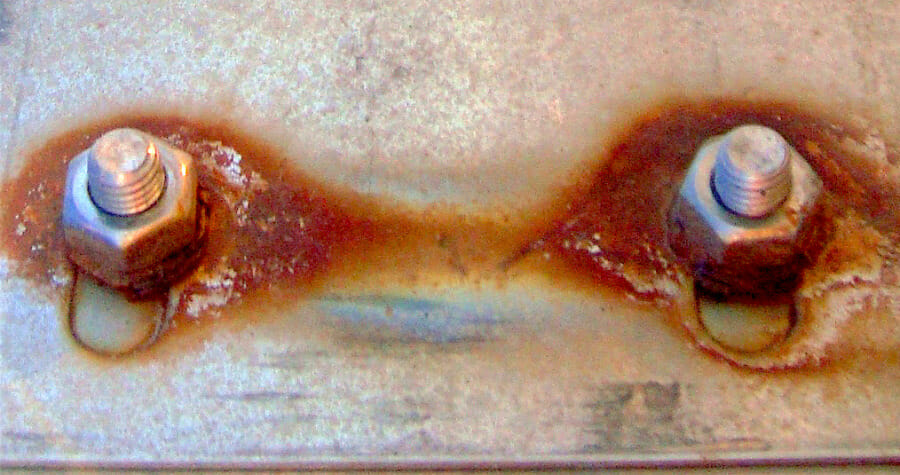
Designing test methods and representative samples for Galvanic Corrosion (GC) assessments.
To make a valid assessment for GC for bolts, nuts, washers and screws against the sounding material, they should be tightened to the correct torque for the application. GC requires hard interference contact between the bolt/screw threads (inc boltheads and washers) and the surrounding hole threads. Loose bolts will allow moisture into the threaded holes that would otherwise be sealed when torqued down. When exposed / un-sealed hole threads are subjected to corrosion testing the corrosion failure mechanism is usually associated with low paint coverage down in the threads, not GC if the bolts are loose. Potential for GC is best measured by ensuring firm electrical contact (torqued down) in the presence of moisture to act as an electrolyte. GC will show local blistering and/or rusting around the bolt/nut arrangement and can sometimes show ‘jelly-like’ corrosion deposits rather like those seen in a dry-battery cell that has burst and leaked.