Archive for June, 2026

UV weathering testing of Haylage bags and strapping

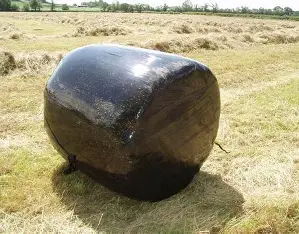
We are pleased to be helping a number of UK and US companies confirm UVA durability of their Haylage bags, bonnets and PVC straps according to BS EN ISO 4892-3 and ASTM G154 for exposure periods up to 5000 hours. Haylage bags for round bales are durable, UV-resistant plastic sleeves designed to protect high-moisture hay or silage, available in various sizes and often reusable.

Haylage bags are typically made from heavy-duty plastic sheet or films of various thicknesses. The thicker sheets help resist ultraviolet rays, maintain mechanical strength and reduce heat build-up during storage. Some bags are specifically formulated for high moisture haylage, while others can serve as end caps for silage bales.
Top

Wood flooring Taber abrasion testing

We are pleased to be helping Wood Floors & Accessories Ltd establish relative abrasive wear data for various finishes. WPA are a knowledgeable and technical team of wood floor specification specialists offering guidance to architects, interior designers, contractors and developers across multiple commercial and residential sectors.

Top

Syensqo collaboration with AWL for VW corrosion testing

We are pleased to be helping Syensqo R&D with VW corrosion conditioning according to PV1210 for automotive paint performance testing. AWL has enjoyed a long collaboration with Syensqo (formally part of the Solvay Group) for coating and adhesive corrosion resistance conditioning to establish and verify best formulations for corrosion and adhesion performance. Other test methods provided for Syensqo have included ASTM G85 Annex 3 (SWAAT) and Annex 1 (AASS).

Syensqo produces a range of materials and specialty chemicals used in industrial, consumer, and energy-related applications.


Top

ISO 15711 Cathodic Disbonding testing of marine coatings at AWL

We are pleased to offer two methods for determining the ability of paint, or other organic coatings, applied to metallic substrates to withstand cathodic disbonding when the surface coating may contain or develop discontinuities.

The methods are applicable to coatings that are exposed to sea water, such as those applied to ships or marine structures that require ISO 12944-9 qualification to CX categories and beyond.

Method A involves the use of a cathodic protection circuit, whereby the electrode potential of the test substrates is controlled potentiostatically.

Method B involves the use of sacrificial anodes attached to the test substrates. This reflects the practical method of cathodic protection commonly used on ships.

Top
Page 1 of 1